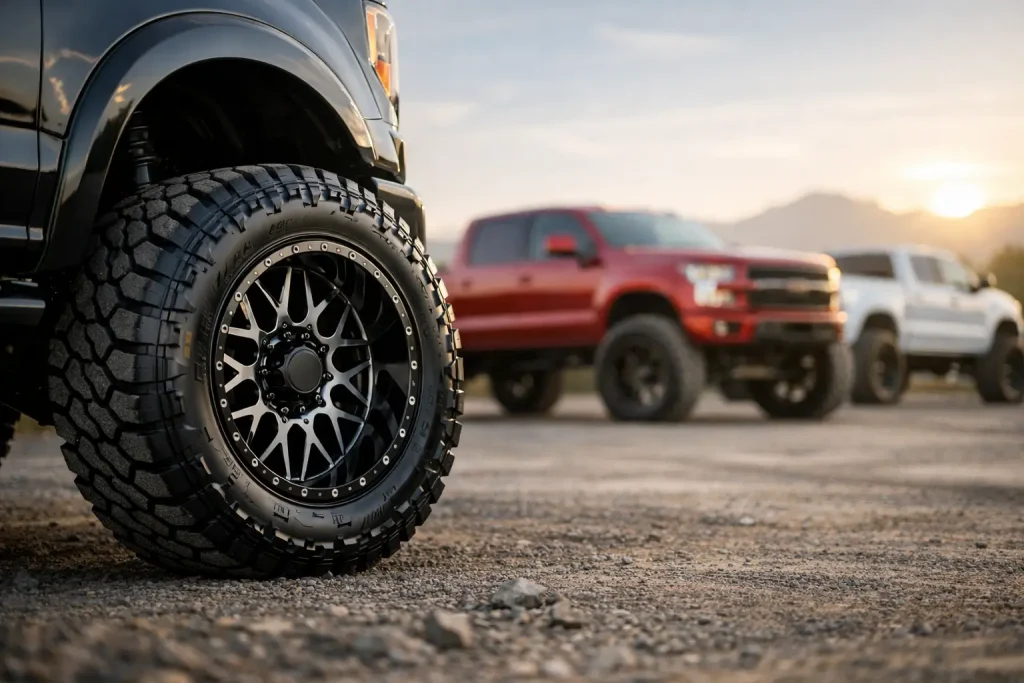
A truck can have fresh paint, a clean lift, and plenty of power, but the wrong wheel setup can throw off the whole look. The right custom wheels for trucks do more than fill the wheel wells. They sharpen your truck’s stance, support the tires you need, and give your ride a look that feels built around your style instead of pulled from a parking lot.
For truck owners in Henderson, Las Vegas, and North Las Vegas, wheel choice also has to work in the real world. Desert heat, road debris, jobsite dirt, freeway miles, and weekend trail runs all put a finish and fitment to the test. A great setup starts with more than picking a color you like. It starts with knowing how you use your truck.
Custom Wheels for Trucks Start With Fitment
Truck wheel fitment comes down to a few measurements that have a major effect on appearance, clearance, and driving feel. Wheel diameter, width, bolt pattern, offset, backspacing, center bore, and load rating all need to make sense for your exact truck.
Diameter gets the most attention because it changes the visual impact immediately. A larger wheel can give a street truck a clean, high-end presence, especially when paired with a lower-profile tire. On a lifted truck built for dirt roads, camping trips, or off-road use, a smaller wheel with more tire sidewall often makes more sense. That extra sidewall can help absorb rough terrain and provide better protection when the trail gets rocky.
Width matters just as much. A wider wheel can create a more aggressive footprint and help deliver the flush or slightly pushed-out stance many truck owners want. But more width is not automatically better. An overly wide setup can lead to rubbing on the fender liner, suspension components, or bumper when turning. It can also throw road spray down the side of your truck and add stress to components if the fitment is extreme.
Offset and Backspacing Control the Stance
Offset tells you where the wheel sits in relation to the hub. A more positive offset generally tucks the wheel farther inward, while a lower or negative offset moves it outward. Backspacing measures the distance from the wheel’s mounting surface to its inner edge. Both affect brake clearance, suspension clearance, and how far the tire sits from the fender.
That aggressive, wide stance looks great on the right build, but it needs to be planned. If you are running larger tires, a lift, aftermarket control arms, or upgraded brakes, those parts all change the available space. A wheel that looks perfect in a product photo may rub on your truck at full steering lock.
This is why a complete wheel-and-tire plan beats buying wheels first and figuring out the rest later. The right fitment should look intentional when parked and stay usable when you are pulling into a driveway, loading gear, or turning sharply in a tight lot.
Match the Wheel Setup to How You Drive
There is no one best wheel size for every truck. The right choice depends on whether your truck is a daily driver, a work rig, a lifted weekend toy, or a show-ready build that sees the Las Vegas Strip as often as it sees the trail.
For a daily-driven full-size truck, a 20-inch wheel often hits a strong balance of appearance and comfort. It gives the truck a more customized look without sacrificing too much tire sidewall. With the right tire package, it can handle commutes, highway miles, and regular use without making every bump feel harsh.
A 22-inch wheel makes a bigger visual statement and can look right at home on a clean, lowered, or street-focused build. The trade-off is less sidewall, which can mean a firmer ride and greater exposure to potholes or curb damage. This setup is often more about clean styling and paved-road performance than off-road flexibility.
For lifted trucks and trail-focused builds, 17- or 18-inch wheels remain popular for a reason. They leave room for a taller all-terrain or mud-terrain tire with meaningful sidewall. That can improve ride quality on rough ground and give you more confidence when the pavement ends. A beadlock-style design may also fit the rugged look, though true beadlock wheels are typically intended for specific off-road applications and may not be the practical choice for every street-driven truck.
Your tire choice belongs in this conversation from the beginning. An all-terrain tire gives many Nevada truck owners the versatility they want: controlled road manners, a tougher look, and reliable grip on dirt, gravel, and light trail conditions. Mud-terrain tires bring a more aggressive appearance and stronger performance in loose terrain, but they can be louder and wear differently on long freeway commutes. If your truck spends most of its life on pavement, that trade-off deserves an honest look.
Choose a Finish That Can Handle Southern Nevada
Wheel finish is where you can make your build look completely different without changing a single mechanical part. Gloss black offers a bold, classic look and works with nearly any paint color. Satin black has a more understated, purposeful feel. Bronze and gunmetal add depth and give trucks with white, gray, silver, blue, or black paint a custom edge without going too flashy.
Machined faces, polished accents, and chrome can bring serious presence, especially on luxury trucks and clean street builds. They also need more attention if you want them to keep looking their best. Las Vegas dust shows up everywhere, and brake dust, road grime, and mineral-heavy water spots can take the shine off any neglected finish.
A coated wheel is easier to maintain than an unprotected one, but it is not maintenance-free. Use wheel cleaners that are safe for the finish, avoid harsh chemicals when possible, and clean the barrels as well as the faces. The inside of the wheel is where brake dust builds up fast, and ignoring it makes later cleaning much harder.
If the truck sees regular trail time, a darker textured finish may hide minor marks better than a highly polished surface. If it is a weekend cruiser or a business truck meant to make an impression, a brighter finish may be worth the extra care. Your style matters, but so does how much time you want to spend keeping the wheels looking fresh.
Do Not Forget Load Rating, Brakes, and Ride Quality
A truck wheel has a job to do. Before choosing a design, confirm that its load rating supports your vehicle and how you use it. This matters even more for owners who tow trailers, haul equipment, carry heavy loads, or run diesel trucks with additional front-end weight.
Brake clearance is another detail that can stop a build in its tracks. Some wheel designs do not clear larger factory brake packages or aftermarket brake upgrades, even when the diameter looks large enough. The spokes, inner barrel shape, and mounting design all play a role.
A heavier wheel and tire combination can also affect acceleration, braking, steering response, and fuel economy. That does not mean you should avoid larger wheels. It means you should choose them with clear expectations. A truck built for visual impact will drive differently than a factory setup, and a properly selected package keeps those changes reasonable.
After installation, correct balancing and alignment are non-negotiable. If you have added a lift, leveled the truck, or moved to a substantially different tire size, alignment helps protect tire life and keeps your truck tracking straight. A tire pressure check is equally important. The pressure printed on the tire sidewall is not always the pressure that gives your particular truck the best ride and wear pattern.
Build a Complete Look, Not Just a Wheel Package
Wheels often set the direction for the rest of a truck build. A black wheel with a machined lip can pair naturally with tinted windows, upgraded lighting, and a clean level kit. Bronze wheels can pull together a desert-ready overland look with all-terrain tires, bed protection, and subtle exterior accents. Polished or chrome wheels can complement a refined truck with a detailed paint finish and a more premium street presence.
The goal is not to add every available upgrade. It is to make the truck look like every part belongs together. A wheel package should complement the vehicle’s body lines, ride height, paint color, and intended use. That is how a custom truck looks finished instead of pieced together.
At Capital Tint and Customs, an in-person fitment conversation can help turn the wheel style in your head into a setup that clears properly, rides right, and holds up to the miles ahead. Pick the wheels that make you look back at your truck after parking it, then make sure the details behind them are built to keep up.